
Sink, the sensitivity of tattooing through ikebana
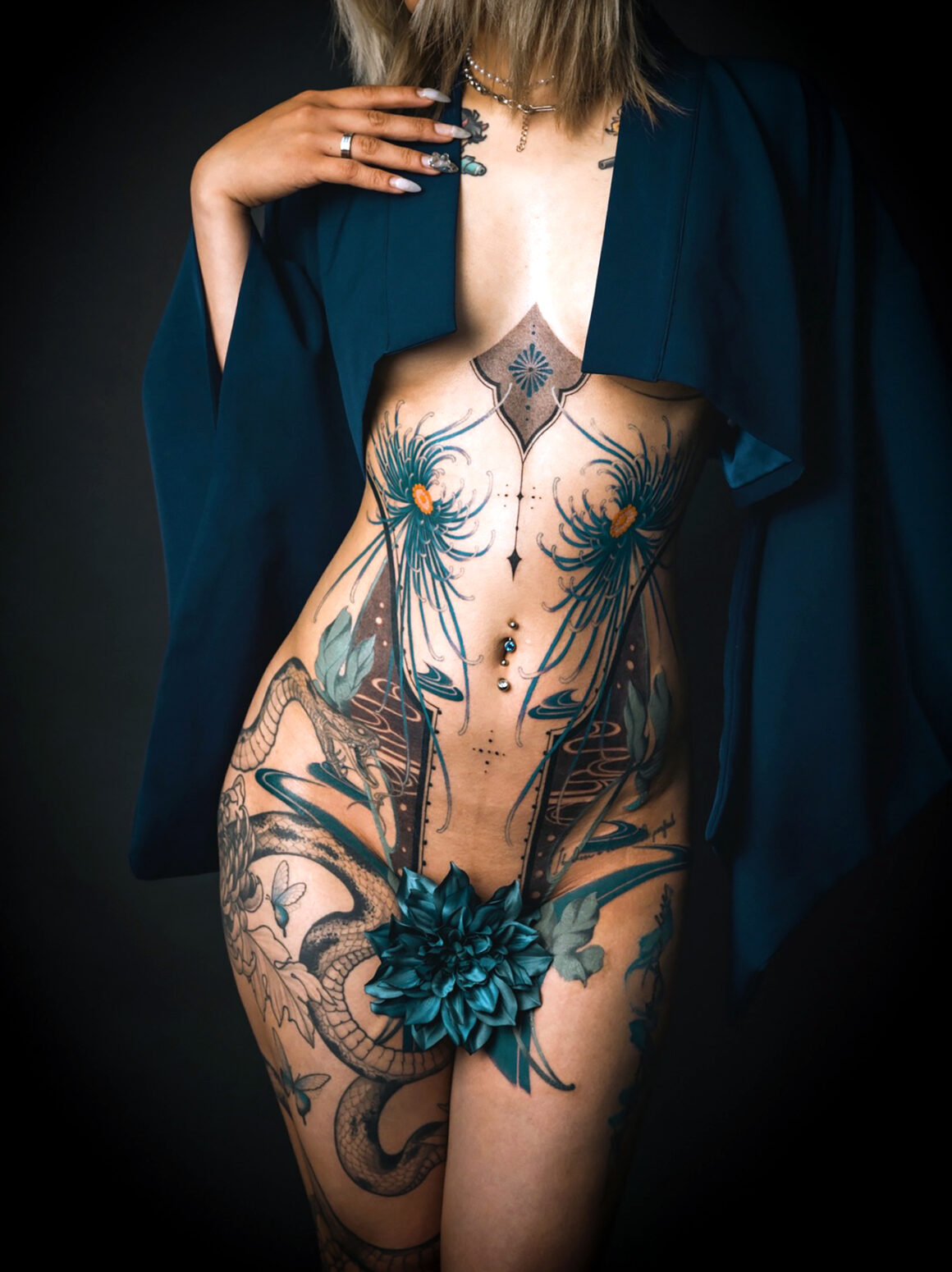
From Kung Fu Champion to Tattoo Artist: The Journey of Sink n nHi Sink began her artistic journey through traditional disciplines, mastering kung fu and achieving runner-up status at a world championship. However, it was through tattoo art that...
From Kung Fu Champion to Tattoo Artist: The Journey of Sink
nHi Sink began her artistic journey through traditional disciplines, mastering kung fu and achieving runner-up status at a world championship. However, it was through tattoo art that she discovered her true creative voice, developing a signature style she calls "Alter Traditional" that she continues to perfect from her hometown of Osaka, Japan.
nTattooing at Gods of Ink Frankfurt: A Natural Connection
nHi Sink's participation at the prestigious Gods of Ink tattoo convention in Frankfurt came through meaningful professional connections built over her career. The experience proved transformative, as clients sought her out after discovering her work on the convention's social media platforms.
nBeing featured alongside respected artists like Gakkin-san and Nissaco-san at the convention represented a significant honor in her artistic journey, and the event has become a cherished milestone in her development as a tattoo professional.
nThe Story Behind the Artist Name "Sink"
nThe name "Sink" carries multiple layers of meaning rooted in Japanese culture and aesthetics. In Japanese, "Sink" refers to a deep crimson color, creating a striking contrast with her real name, Aiko, which represents deep blue. This color duality mirrors the philosophical balance of yin and yang in Asian philosophy.
nThe name also connects phonetically to "needle" in Japanese, reinforcing her identity as a tattoo artist. As Hi Sink explains: "I chose this name – Sink – as it embodies my intention to express Asian and Japanese aesthetics through the use of the needle."
nArtistic Influences: Beyond Tattooing
nHi Sink's distinctive tattoo style draws heavily from disciplines outside of traditional tattooing. Her early practice of kung fu introduced her to the concept of "flow of energy," a principle that became fundamental to her artistic approach.
nPerhaps most significantly, her study of ikebana (traditional Japanese flower arrangement) profoundly shaped her compositional philosophy. Ikebana taught her refined aesthetic principles including:
n- Shin, soe, and hikae – foundational structural elements
- Shu, ha, ri – the progression from learning to innovation
- Jo, ha, kyu – temporal rhythm and pacing n
These traditional Japanese principles emphasizing simplicity, reduction, and balance directly influence how Hi Sink composes her tattoo designs.
nThe Philosophy of "Alter Traditional" in Tattoo Design
nHi Sink's concept of "Alter Traditional" reflects her belief that ikebana expresses past, present, and future within a single artistic vessel. This philosophy extends directly into her tattoo work, where she seeks to capture temporal and spiritual dimensions simultaneously.
nHer approach aims to embrace multiple artistic elements as an integrated whole—combining tradition, color study, elegance, harmony, and peace of mind. Within opposing forces and contrasting elements, Hi Sink finds the nuanced "gray areas" that give her work its distinctive depth and sophistication.
nNews Tattoos
Tattoo enthusiast and writer at News Tattoos. Passionate about tattoo art, culture, and the stories behind the ink. Covering the global tattoo community since 2022.